How High to Hang Art Above a Sofa: A Practical Guide
Last Updated: November 6, 2026
Quick Summary
To hang art above a sofa, place the center of the piece around 57 to 60 inches from the floor and leave 6 to 8 inches of space between the bottom of the frame and the top of the sofa. Always measure up from the sofa rather than down from the ceiling.
- Measure from the sofa up, not from the ceiling down, when placing art.
- The artwork should span about two-thirds of your sofa's width, frame included.
- Leave 2 to 4 inches between frames when hanging a group of pieces.
- With high ceilings you can raise the center a few inches; with low ceilings keep it near 57 inches.
- Use painter's tape to outline the piece and live with it for a day before hanging.
Table of Contents
- How High to Hang Art Above a Sofa
- How Large Should a Picture Be Above a Sofa?
- Hanging 2 Pictures Above a Couch or 3 Pictures Above Couch
- A Quick Reference Before You Pick Up the Hammer
- Frequently Asked Questions
How High to Hang Art Above a Sofa
The short answer: hang art so the center of the piece sits around 57 to 60 inches from the floor, with 6 to 8 inches of breathing room between the bottom of the frame and the top of the sofa. Those numbers are a starting point, not a rule.
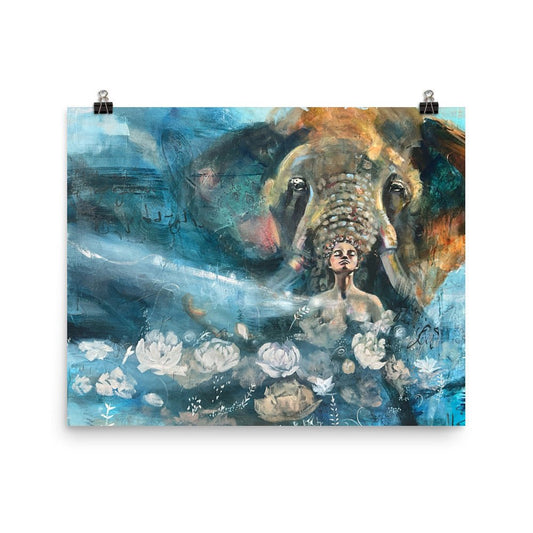
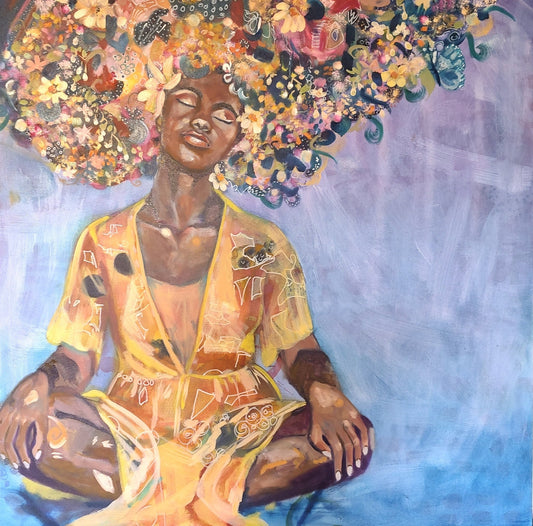
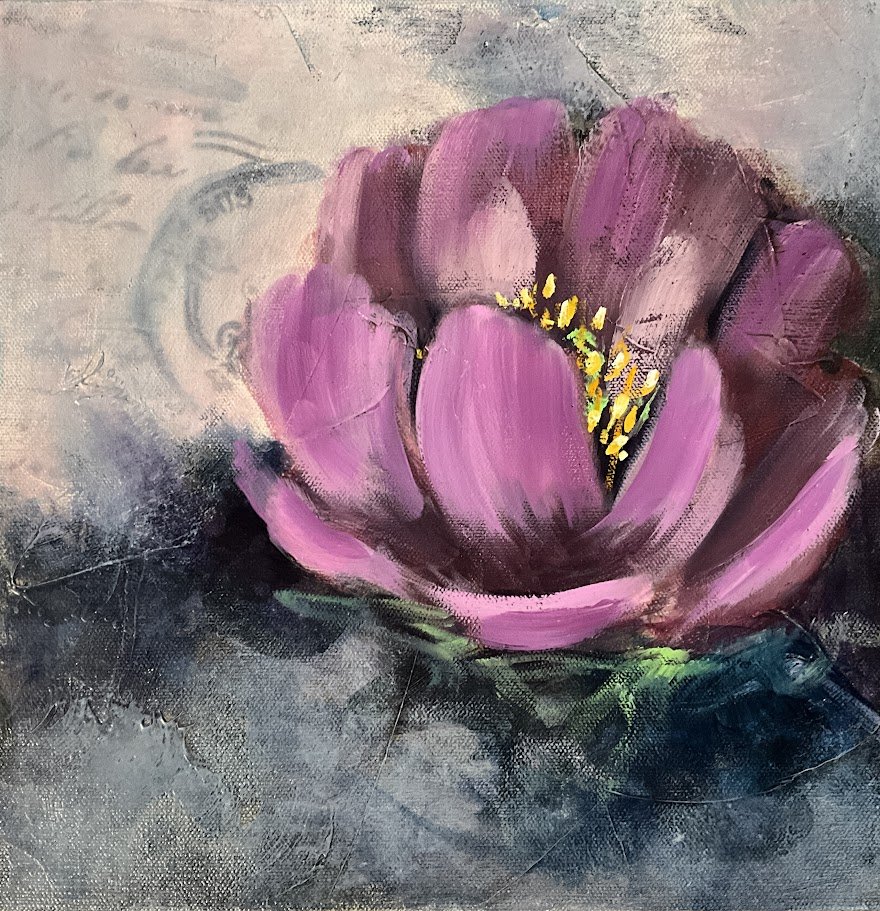
I'm Sarah Andreas, and I paint layered mixed media oils. A painting hung at the right height feels like it belongs there, while one that floats too high feels like a guest who hasn't settled in.
The Simple Number to Start With
Find the spot that hits your natural line of sight when you're standing, not sitting. A common guideline puts the center of the artwork at about 57 to 60 inches from the floor. Your eye reads the middle of a piece first, so if the center sits at eye level, the whole painting feels balanced no matter its size.
The Gap Above the Sofa
The space between the bottom of the frame and the top of your sofa should be 6 to 8 inches. Any tighter and the art feels crowded; any wider and it starts to float. A common mistake is measuring from the ceiling down instead of from the sofa up. Always start at the sofa.
When Your Room Doesn't Cooperate
With high ceilings you can push the center up a few inches without losing the connection to the sofa; with low ceilings, keep the center closer to 57 inches. The goal is always the same: the art should feel tied to the sofa, not to the ceiling.
How Large Should a Picture Be Above a Sofa?
The artwork should span about two-thirds of your sofa's width (Art Sizing Rules Over Sofa - 2/3 Golden Rule for Art). A piece that's too small looks lost, and one that's too wide overwhelms the sofa and the wall.
Measuring for One Piece
Measure your sofa's width and multiply by 0.66. That's your target artwork width, frame included. If your frame is wide, count it.
What If You Love a Smaller Piece?
A smaller painting can work above a sofa if you pair it with others, or place it over a console table or a pair of lamps that widen the visual group. Scale is about the whole arrangement, not just the canvas. For a closer look at larger options, you can browse large framed fine art prints that suit the space above a sofa.
Find Art That Speaks to You. →
Hanging 2 Pictures Above a Couch or 3 Pictures Above Couch
Two or three pieces can feel more personal than one large work. Leave a few inches between frames, and treat the whole group as one shape when you measure. For two pictures, center the pair over the sofa and measure the combined width, frames and gap together. For three, place the largest in the middle and let the outer two balance it.
Spacing That Looks Intentional
If you're working out exact spacing for a pair or a trio, this guide on how far apart to hang pictures walks through the measurements.
When Wall Space Is Tight
If your sofa sits close to a corner or a doorway, a single vertical piece or a stacked pair can work better than a wide row. This piece on displaying art in a small apartment has ideas for limited walls.
A Quick Reference Before You Pick Up the Hammer
Here's the whole method in one place.
| What to measure | Target | Why it matters |
|---|---|---|
| Center of artwork from floor | 57 to 60 inches | Meets your natural eye level |
| Gap above sofa | 6 to 8 inches | Keeps art tied to the furniture |
| Artwork width | About two-thirds of sofa width | Creates balance and scale |
| Gap between frames in a group | 2 to 4 inches | Makes the group read as one |
| Frame width | Count it in your total | Frames change the real size |
Use painter's tape to outline the piece on the wall and live with it for a day. Check the hardware for your wall type, use anchors in drywall, and measure twice.
Frequently Asked Questions
How high above a couch should art go?
A common guideline is to place the center of the artwork about 57 to 60 inches from the floor, which puts it near average eye level. The bottom edge usually sits 6 to 10 inches above the top of the sofa back. If your sofa is tall or your ceilings are low, adjust within that range so the piece feels connected to the furniture rather than floating.
What is the two-thirds rule for sizing art above a sofa?
The two-thirds rule says artwork should span roughly two-thirds of the sofa's width. For a 90-inch sofa, that means about 60 inches of art, whether one large piece or a group. This keeps the art in proportion with the couch instead of looking lost or overwhelming. Measure your sofa first, then shop with that number in mind.
How do you hang three pictures above a couch?
Treat the group as one shape. Measure the total width of the three frames plus the gaps, center that span over the sofa, and keep the middle of the arrangement at 57 to 60 inches from the floor. Leave 2 to 3 inches between frames. Before drilling, tape paper templates to the wall and step back to check the balance.
Hanging art well is really about paying attention to your own space, not forcing it to match a formula. If you'd like help choosing a piece that fits your wall and your season of life, I'm glad to look at a photo of your space and talk through scale and placement with you. You can explore my available paintings and prints whenever you're ready, no pressure and no rush.