7 Ways to Display Art in a Small Apartment
Quick Summary
To display art in a small apartment, start by noticing where you look most often and how much open wall you really have. Choose pieces that fill about two-thirds of the wall or furniture below them, and hang groups with two to three inches between frames. This display art small apartment approach keeps the room feeling calm and personal.
- Hang the center of a piece or group at a comfortable viewing height.
- Keep a group no wider than about two-thirds of the sofa's width.
- Use two to three inches of space between frames in a tight cluster.
- Lay pieces on the floor and photograph the layout before hanging anything.
- Check adhesive strip weight limits and test them in a hidden spot first.
Table of Contents
- Start With the Room You Actually Have
- Choose Small Apartment Wall Art Ideas That Fit Your Scale
- How to Arrange Art on a Small Wall
- How to Hang Art Without Damaging Walls
- How to Display Art Without Hanging It
- Choosing Your First Piece for a Small Space
- Frequently Asked Questions
Start With the Room You Actually Have
Before you pick up a hammer or a single frame, take a slow walk through your apartment, because the right display art small apartment setup starts with noticing where the light falls in the afternoon, where you sit most often, and which walls you see every day. Read how to choose animal art that feels personally meaningful for guidance on picking a first piece.
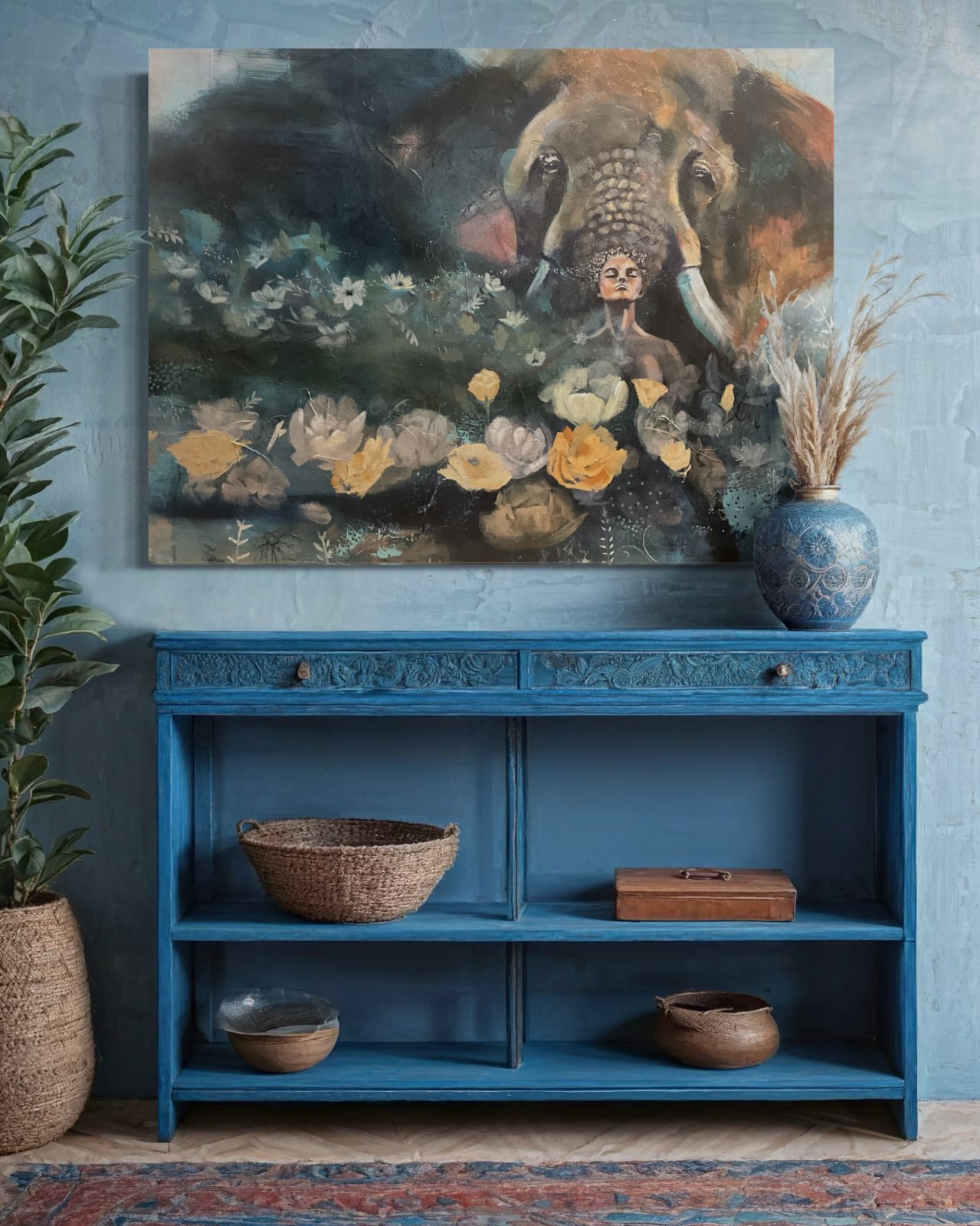
A few questions can help you focus:
- Which wall do you look at when you first walk in?
- Where do you rest your eyes when you're sitting still?
- How much open wall is really available, once furniture and windows are counted?
- Is there a corner or narrow strip that feels unused?
Small rooms reward careful choices. You don't need a wall full of art to make a space feel personal. One well-placed piece can often do more than five scattered ones.
Choose Small Apartment Wall Art Ideas That Fit Your Scale
Scale matters more in a small apartment than almost anywhere else. A large piece in a tight room can feel like it's pressing in, while a tiny piece can get lost. Aim for artwork that fills roughly two-thirds of the wall or furniture space it lives above.
If you're deciding between sizes, consider a few options:
- One larger statement piece above a sofa or bed, for a calm, focused look
- Two medium pieces side by side, for balance on a narrow wall
- Small framed works grouped together, for a relaxed, personal feel
- Large framed prints, which can give you impact without the higher cost of an original
My Succulents painting (10 x 10 inches, $200.00) is a good example of a smaller piece that works well on a desk, a shelf, or a narrow wall in a compact room. Succulents | Sarah Andreas Art | Mixed Media Oil Painting shows how it looks in person, and if you're weighing sizes and formats, you might also browse Large Framed Fine Art Prints: 10 Pieces for Your Home as an option for a small apartment.

How to Arrange Art on a Small Wall
Arrangement is where a small wall either settles down or starts to feel busy. The pieces themselves can be lovely and the layout can still fight the room.
Start with height.
Spacing matters just as much. Two to three inches between frames is a reliable range for a tight cluster. If the frames are very thin, you can go a little closer.
For a narrow wall, like the strip beside a door or at the end of a hallway, a vertical stack often works better than a horizontal row.
Before anything goes on the wall, lay the pieces on the floor in the layout you're considering. Step back to where you usually sit or stand and look at it from there.
A few approaches worth trying:
- Align the bottom edges of your pieces, or center everything on one horizontal line.
- Keep the space between frames even, usually two to three inches.
- Group pieces in a single cluster rather than spreading them across the wall.
- Lean a larger piece on a shelf or console and let a smaller one hang above it.
- For a changing collection, plan the cluster on a paper template first so you can add a piece later without moving everything.
If you're building a collection over time, it helps to decide the outer boundary of the cluster now, even if the middle is still open.
Here are the key placement numbers from the arrangement section, so you can check your layout quickly.
| Layout element | Guideline | Note |
|---|---|---|
| Group width | About two-thirds of sofa width | Keeps the cluster from crowding the edges |
| Space between frames | Two to three inches | Go closer for thin frames, wider for deep or ornate ones |
| Viewing height | Center at a comfortable eye level | Check it with the photo test |
| Narrow wall | Vertical stack | Two or three pieces, centered on the wall |
| Single piece | Centered over bed or seating | Often does more than several small works |
How to Hang Art Without Damaging Walls
Many people rent, and even homeowners sometimes want to avoid a wall full of holes.
Start with weight. A piece's weight matters as much as its size, and a deep frame or a glass front can push a modest print into a heavier category. Weigh the framed piece on a kitchen scale if you're not sure, then choose a method rated comfortably above that number.
Succulents | Sarah Andreas Art | Mixed Media Oil Painting →
A few options to consider:
- Adhesive picture hanging strips rated for the weight of your frame, applied to a clean, dry wall and pressed firmly for the full time the package recommends before hanging
- Removable hooks designed for lightweight artwork, often with a lower weight limit than strips
- Leaning pieces on a shelf, console, or mantel, which needs no hardware at all
- Easel or stand displays for smaller canvases
- Picture rails or a narrow ledge, which let you move pieces without new holes
Before you use adhesive strips, test one in a hidden spot and read the removal instructions. Some paints and wall finishes can react poorly, so a short test saves frustration later.
If you're willing to make a small hole, a single nail or a screw with a proper anchor can be more secure for a heavier piece than adhesive alone. In that case, a stud finder and a pencil mark at the hanging height will save you a second attempt.
A simple process works for most small apartments:
- Weigh the framed piece and note the wall surface.
- Choose a method rated above that weight for that surface.
- Mark the center height on the wall with a pencil, using the 57 to 60 inch guideline.
- Hold the piece in place and step back before committing.
- Follow the product's cure time before hanging anything on it.
If a piece is heavy or the wall is uncertain, leaning it is a perfectly good answer. Not every wall needs a hole in it.
How to Display Art Without Hanging It
Sometimes the best solution is to skip the wall altogether. Art can live on furniture, in a bookcase, or on a tabletop, and it can change with the seasons or your mood.
A few ideas:
- Lean a canvas on a bookshelf and rotate it every few months
- Set a small piece on a dresser or entry table
- Use a simple ledge or narrow shelf for a row of prints
- Keep a rotating stack of framed works for an easy refresh
This approach is especially helpful if you're still deciding where you want to live long term. You can enjoy your art now without committing to permanent placement.
Choosing Your First Piece for a Small Space
If you're new to buying original art, a first piece can feel like a big decision. You don't need to get everything right on the first try. Think about how the painting makes you feel when you look at it, and whether you can picture it in your daily routine. Learn the difference between oil and mixed media painting before you decide which kind suits your space.
Consider a few questions before you buy:
- Do the colors fit the light in your room?
- Will the size work with the furniture you already have?
- Does the piece feel calming, energizing, or quietly interesting to you?
- Could you live with it for years, not just a season?
When you're ready to look at pieces, you can browse what's available in my studio. See what original paintings for modern homes look like to get a sense of styles that suit contemporary rooms.
My Succulents II and III paintings (12 x 12 inches, $250.00 each) are both sized for desks, shelves, and small walls, and they're built from layered collage, acrylic washes, and oil paint.
If a painting speaks to you, I'd love for you to explore what's available in my studio. Take your time, and let the piece you choose fit your space and your life.
Frequently Asked Questions
How do you display art in a small apartment?
Start with one or two pieces placed where your eye naturally lands, such as above a sofa, beside a window, or on a shelf. Keep the number of pieces modest so the room still feels calm. Scale matters more than quantity: a single larger piece often works better in a small space than several small frames scattered around. You can also lean art on a console, a bookshelf, or the floor, which lets you change the display without any wall work at all.
What size art works best in a small room?
In a small room, art that fills roughly two-thirds of the wall above a sofa or piece of furniture tends to look intentional. Very small pieces can look lost on a big wall, while an oversized piece can crowd the space. Measure the wall before you shop, and hold a piece of paper cut to the size of the artwork against the wall to test how it feels. Vertical pieces can also draw the eye upward and make ceilings seem higher.
How do you hang art without damaging apartment walls?
Many renters use adhesive picture hooks or removable strips rated for the weight of the frame, and they generally leave less damage than traditional nails. Check the weight rating on the package and stay under it, especially for heavier framed pieces. Lightweight canvases or prints in good frames are easier to hang this way. Your lease or building rules may limit what is allowed, so it is worth checking before you begin.
Can you display art without hanging it on the wall?
Yes. Leaning art on a shelf, mantel, console table, or the floor works well and keeps walls untouched. Picture ledges and shelves offer a clean, easy-to-change display. Easels and stands are another option for a small painting. Rotating pieces seasonally is simple with this approach, which suits people whose collections or moods change over time.