How to Find Meaning in Expressive Abstract Art
Last Updated: November 14, 2026
Quick Summary
The benefits of expressive abstract art include permission to slow down and check in with yourself, while making it engages your hands and gives restlessness somewhere to go. I hold these benefits loosely and specifically: attention, a pause, and a way to notice what you feel.
- Abstract art communicates feeling through color, shape, line, and texture rather than depicting a scene.
- Give a painting three or four minutes and notice color first, then shape, texture, and space.
- People don't all see the same painting the same way, and that's not a failure of understanding.
- Pick one painting and answer just the color question, then return the next day for texture.
- The right abstract wall art doesn't match your sofa, it matches something in you.
Table of Contents
- Understanding Abstract Art: Why It Invites You In
- The Benefits of Looking at Abstract Art
- Abstract Art Examples: What to Notice in a Painting
- Living with Abstract Wall Art That Feels Like Yours
- Frequently Asked Questions
Understanding Abstract Art: Why It Invites You In
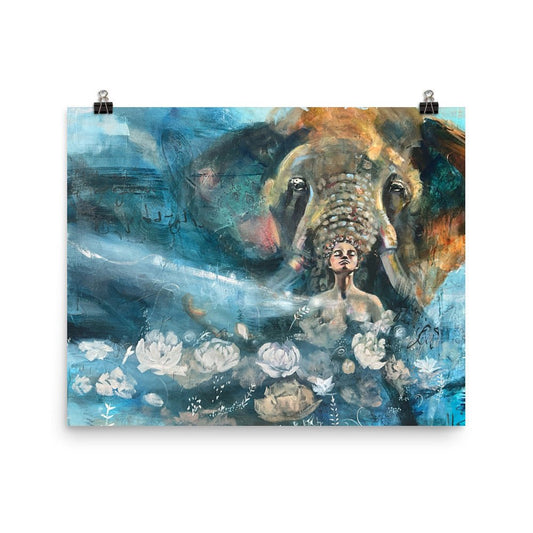
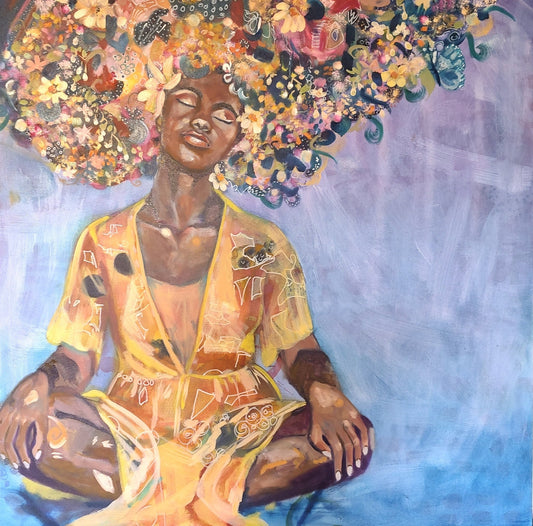
The benefits of expressive abstract art start with a simple shift: you stop asking what a painting shows and start noticing what it stirs in you. Abstract art uses color, shape, line, and texture to communicate feeling rather than depict a scene. Expressive abstract art leans further into that honesty, with visible marks, layered surfaces, and choices that carry the artist's hand into the room.
At Sarah Andreas, I paint in mixed media and oil because layers let a piece hold contradiction, the way a life does. You can read more about our philosophy.
The Benefits of Looking at Abstract Art
The benefits of looking at abstract art are quieter than people expect, and more real. A painting can give you permission to slow down and check in with yourself. I'd stop short of promising it fixes anything.
When you make, the benefits tend to be more physical and immediate. Mixing paint, tearing paper, layering, and scraping back all engage your hands and give restlessness somewhere to go. That's not therapy, and I don't want to oversell it. It's closer to the way a long walk or cooking a real meal can settle you.
A few things worth knowing about the evidence, because the internet is full of big claims. Most of what's studied is guided making with a trained professional, not a solo afternoon with a canvas. So I hold these benefits loosely and specifically: attention, a pause, a way to notice what you feel. Those are worth having.
Watch out: if looking at art or making it brings up grief, anxiety, or memories that feel too heavy to sit with alone, that's a signal to talk with a licensed mental health professional rather than push through on your own.
What I notice in my own studio is that the two activities feed each other. Time spent looking makes me a more honest painter, and time spent painting makes me a slower, more curious viewer. If you're not sure which one you need, that's a good question to sit with. You might start by standing in front of one piece for a few minutes and noticing what happens. That quiet attention can become a practice in its own right, and Pure Art Moments invites the same kind of presence into the act of making.
Abstract Art Examples: What to Notice in a Painting
Start with one element at a time. Notice color first: which hues pull your eye, and whether they feel warm or cool to you. Then look at texture and layers, which often reveal how a piece was built. In my own work, I combine collage, expressive mark making, acrylic layers, and luminous oil paint, and each layer changes what the surface says. If you're curious how that differs from straight oil painting, oil painting versus mixed media painting explains the difference in plain terms.
Here's a way to look that goes a little deeper than "I like it" or "I don't." Give a painting three or four minutes and move through these questions in order.
Color: which two or three hues keep drawing your eye back, and do they sit next to each other on the canvas or far apart? Notice whether the color feels calm or charged to you. There's no right answer, and your read may change on a different day.
Shape and line: are the marks sharp or soft, fast or slow? A hard edge and a loose, dragging line tend to feel different in the body, and noticing which one you lean toward tells you something about what you find restful versus exciting.
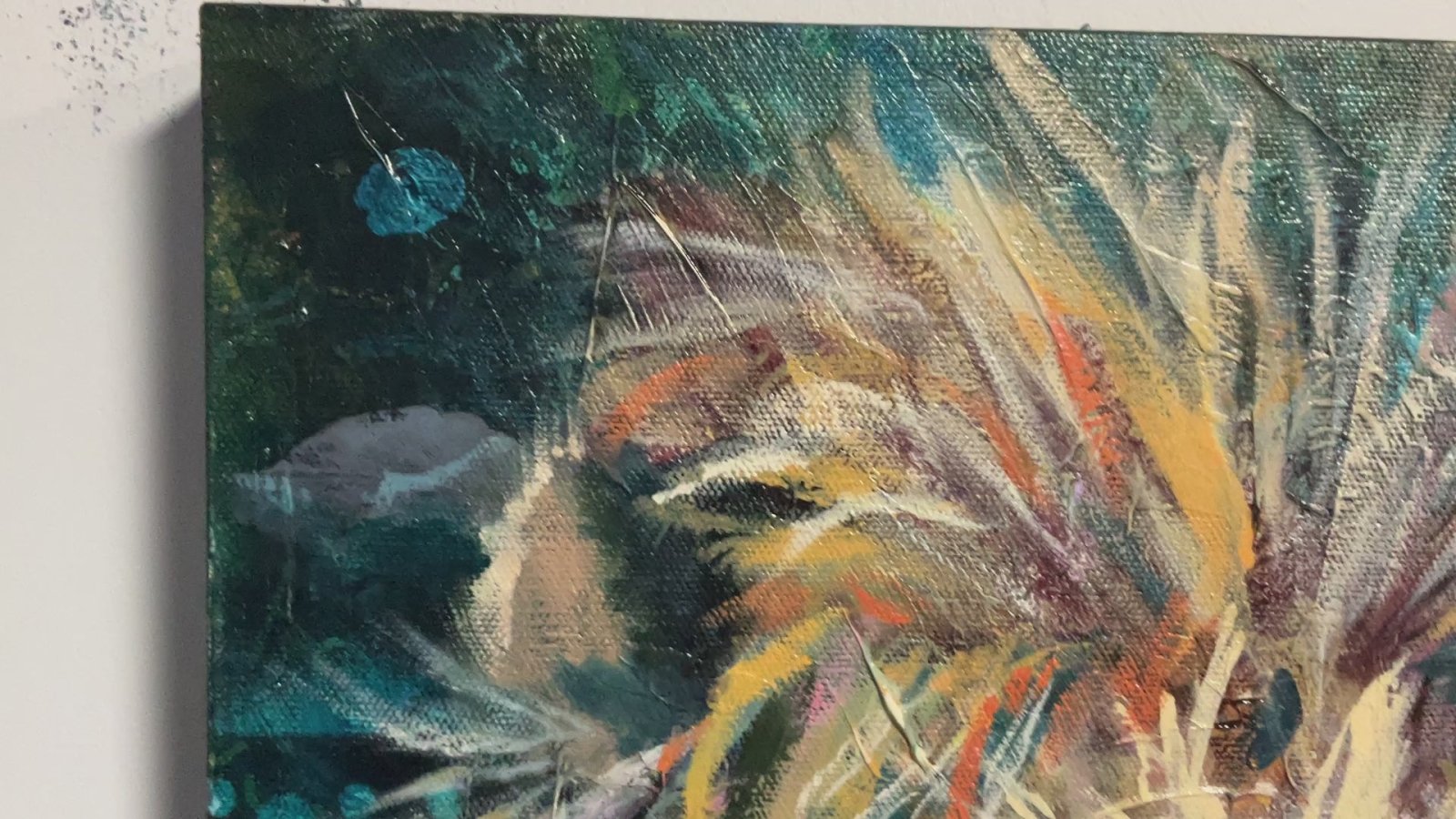
Texture and layers: look closely at the surface. Can you see where one layer sits over another, or where the artist scraped back to something underneath? In mixed media especially, those visible decisions are part of the meaning. A buried layer that only partly shows can read as something held back, and that's often what draws people to a piece.
Space: does the painting feel open or crowded, flat or deep? Abstract work plays with space in ways that don't follow the rules of a photograph, and that's part of what makes it feel alive.
One thing competitors tend to skip: people don't all see the same painting the same way, and that's not a failure of understanding. Your background, your mood that day, whether you're neurodivergent, whether you have low vision, and what you've lived through all shape what you notice first. Someone who works with color every day may fixate on a single hue, while someone else feels the composition in their body before they name a single element. Neither is more correct. If a piece leaves you cold, that's useful information too, and it doesn't mean you're missing something.
If you want a place to start, pick one painting and answer just the color question. Then come back the next day and answer the texture question. Over a week you'll have a much clearer sense of what you actually respond to, which makes choosing art for your home far less about matching a sofa and more about recognizing yourself in a piece.
Here is the order I suggest for looking at a painting, one element at a time.
| Element | What to notice |
|---|---|
| Color | Which two or three hues keep drawing your eye back |
| Shape and line | Whether marks feel sharp or soft, fast or slow |
| Texture and layers | Where one layer sits over another, or scraped back |
| Space | Whether the painting feels open or crowded, flat or deep |
Living with Abstract Wall Art That Feels Like Yours
The right abstract wall art doesn't match your sofa. It matches something in you. Choose a piece you keep returning to rather than one that simply fills a wall, and let it mean what it means to you, not what a description says. When you're ready, you can browse original mixed media oil paintings, or read how to style mixed media art in a room.
Finding art that reflects where you are right now takes a little patience, and it's worth it. Sarah Andreas creates original mixed media oil paintings and fine art prints for women in the middle of change, with layered color and texture that bring individuality and story into a home. Personalized help with scale and placement is available through wall photographs, and each piece is one of a kind. Get started with Sarah Andreas and choose a painting you'll want to live with.
Frequently Asked Questions
What are the benefits of looking at abstract art?
Looking at expressive abstract art gives your attention somewhere to rest that doesn't demand a right answer. Color and texture can open a little space for reflection. Because there's no scene to identify, you're free to notice what you feel and what memories surface. I think of it as a quiet conversation rather than a puzzle to solve. Many people find that a few minutes with a painting leaves them more settled than scrolling ever does.
Why can two people see different things in the same abstract painting?
Abstract art leaves out the recognizable subject, so your own experience fills the gap. Two people bring different memories, moods, and associations to the same shapes and colors, and both responses are valid. This is part of what makes understanding abstract art personal rather than fixed. When you look at a piece like Wild Joy, the fiery orange petals might read as courage to one person and as celebration to another. Neither reading is wrong.
How do I choose abstract wall art I'll want to live with?
Start by noticing what you respond to before you think about where it will go. Save images that catch your eye, then ask what they have in common: certain colors, a sense of movement, softness, or contrast. Live with the idea for a few days. When you're ready, a piece like Just What I Needed or Better Together can anchor a room with its own story.