Styling Animal Art in a Modern Living Room
Last Updated: October 31, 2026
Quick Summary
Styling animal art in a modern living room means choosing a creature that draws you in, then matching the piece's style, color, and finish to your space. Hang it at eye level, about 57 to 60 inches from the floor, and let it span roughly two thirds of the sofa's width. Echo one or two of its colors nearby so the piece feels collected rather than themed.
- Hang the center of the artwork at eye level, roughly 57 to 60 inches from the floor.
- Art above a sofa should span about two thirds of the sofa's width.
- Leave a gap of about 6 to 8 inches between the frame and the sofa or table.
- Repeat one or two colors from the painting in pillows, a rug, or a throw.
- Keep one strong animal piece per room so it reads as a choice, not a theme.
Table of Contents
- Why Animal Art Belongs in a Modern Living Room
- How to Choose Art for a Living Room That Feels Like You
- Animal Art for Living Room Style: Matching the Piece to Your Space
- Living Room Art Placement and Scale That Works
- Coordinating Animal Art With Your Existing Decor
- Finding a Piece You Want to Live With
- Frequently Asked Questions
Why Animal Art Belongs in a Modern Living Room
Animal art earns its place in a modern living room because it brings warmth and a living subject into rooms that can otherwise feel cool and spare. Clean lines and open space are lovely, but they need something with a pulse.
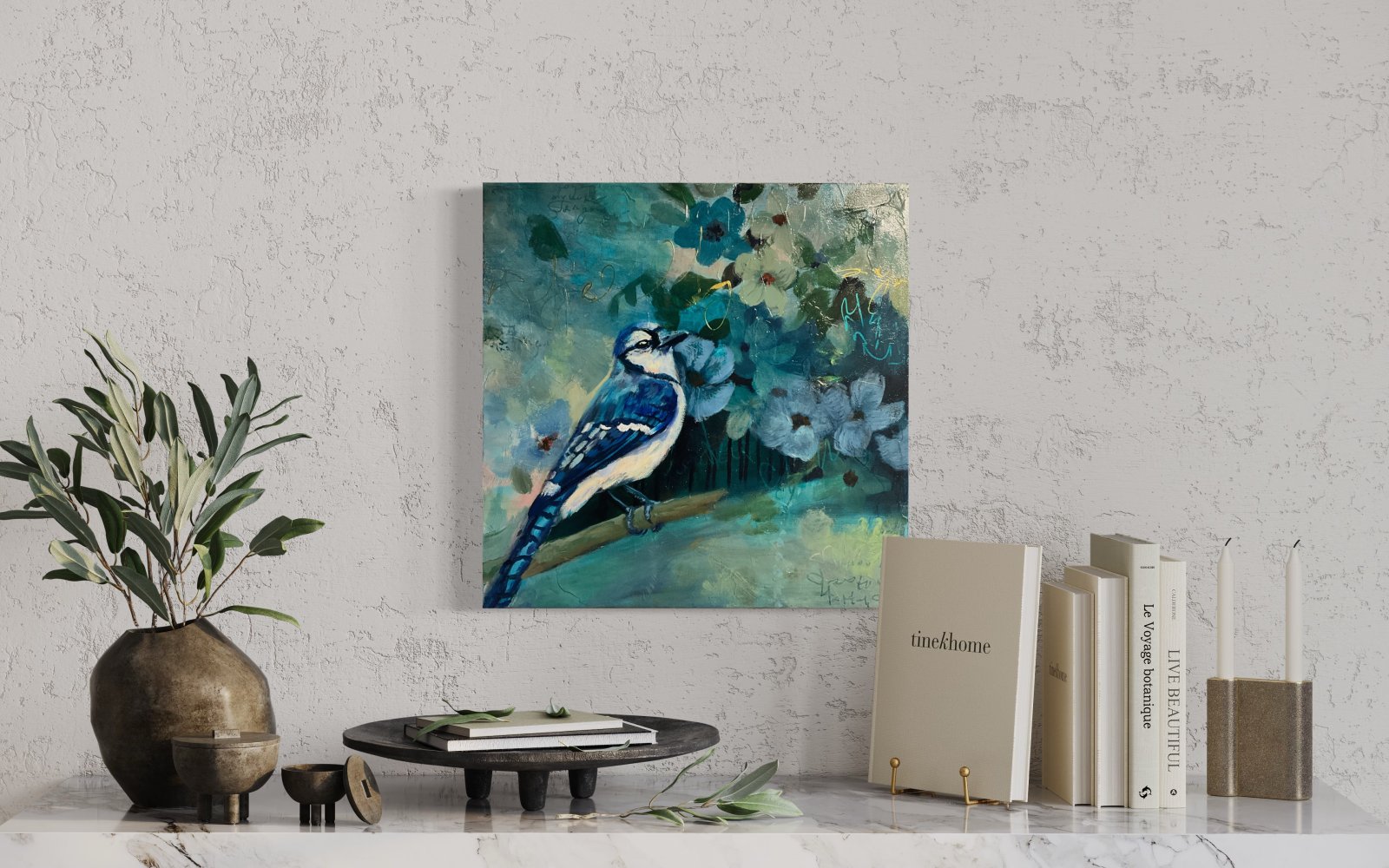
This guide walks through choosing, sizing, and hanging animal wall art so it feels collected rather than decorated. Below, you'll find a simple selection process, placement guidance, and notes on what to look for. The animal itself matters, but so does the feeling it stirs in you.
What Animal Art Adds That Abstract Pieces Can't
Abstract work asks you to bring your own meaning. Animal paintings meet you halfway. A creature has a face, a posture, a mood, and your eye reads all of that in a second.
That's why wildlife art so often becomes the piece people talk about. It carries personality and energy without shouting. A quiet bird on a fence post can hold a whole wall.
There's also the recognition factor. A beloved pet, a horse you rode as a kid, a bird you watch from the kitchen window: these images connect to memory.
How to Choose Art for a Living Room That Feels Like You
Learning how to choose art for a living room starts with noticing what you already respond to, not with what's trending. Before you shop, look at the art you've kept for years. What animals show up? What colors pull at you?
Then ask yourself a few plain questions:
- Which animal makes you pause, and why?
- Do you want calm or energy on this wall?
- Is this piece for you, or for guests?
- What in this room already feels like you?
A common mistake is buying for the room's color scheme first and your own response second. Color can be worked around. A piece that leaves you cold can't be fixed.
Start With the Animal That Draws You In
The right animal is the one you keep looking at. Lions suggest courage and quiet authority. Horses bring movement and freedom. Birds carry lightness. Foxes feel clever and adaptable. Farm animals often hold a sense of home.
You don't need to justify your choice. If a bear settles something in you, that's reason enough. If you're drawn to big cats, you can browse available paintings and prints and see what speaks to you in person.
Animal Art for Living Room Style: Matching the Piece to Your Space
Matching animal art to a modern room comes down to three things working together: the style of the artwork, the colors in it, and the way it's finished. Get those aligned and the piece looks like it was always meant to be there. Get one wrong and even a painting you love can feel off.
Start with style. A mixed media painting adds texture and depth that photographs can't quite capture, and that texture gives a minimal room something to look at up close.
Color matters more than most people expect. You don't need the painting to match your sofa.
Finish changes the feel as much as the image does.
If your space leans modern, you might enjoy seeing available paintings and prints for a sense of how bolder work sits against clean walls.
Living Room Art Placement and Scale That Works
Good living room art placement starts with scale. A piece that's too small floats on a large wall. One that's too large crowds the room. As a rule of thumb, art above a sofa should span about two thirds of the sofa's width.
Sovereign Skies - Mixed Media Eagle Painting on Paper (22x30) →
Then think about height. Hang the center of the artwork at eye level, roughly 57 to 60 inches from the floor. Above furniture, leave a gap of about 6 to 8 inches between the frame and the sofa or table.
Hanging Height and Wall Space
Wall space decides a lot. A narrow strip between windows wants a tall, slim piece. A long empty wall can take oversized wall art or a multi-panel arrangement.
If you're unsure about scale, measure the wall and mark the outline with painter's tape before you commit. Seeing a large piece with known dimensions, like Sovereign Skies, can help you judge how a painting of that size would sit on your wall.

Coordinating Animal Art With Your Existing Decor
Coordinating animal art with your decor is easier than it sounds, but it asks for a little more thought than matching a color.
The fix is usually restraint in one place and repetition in another.
Pull one or two colors from the painting and repeat them in pillows, a rug, or a throw. You don't need to match everything. A little echo is enough, and too much matching starts to look staged.
Texture helps bridge styles. If your room is all smooth surfaces, a textured painting adds softness. If it's already busy, a clean framed print calms things down. Materials matter too.
Watch out for clutter. Modern rooms work best when the art gets room to breathe. Keep the surrounding wall fairly clear and let the piece be the focal point.
A simple test: cover the animal with your hand and look at the rest of the room. If the colors and materials still feel connected, the piece is coordinated. If the room only makes sense because of the animal, you're decorating a theme instead of a home.
If you're weighing a few pieces against your room, it helps to see them at scale before you commit. You can browse available paintings and prints to compare color against what you already have.
Finding a Piece You Want to Live With
The piece you want to live with is the one you'd still notice in a year. That usually means buying for meaning first and style second. Trendy subjects fade. A creature that means something to you doesn't.
Take your time. Look at a piece more than once, in different light if you can. Ask whether it feels like the life you're building, not the life you think you should want.
If you're ready to go bigger, you can explore available paintings and prints for guidance on scale.
| Step | What to Do | Why It Helps |
|---|---|---|
| 1. Notice | List animals and colors you respond to | Reveals your real taste |
| 2. Match | Choose style, format, and finish | Fits your room's look |
| 3. Size | Measure wall and furniture | Prevents scale mistakes |
| 4. Place | Mark height and width with tape | Tests the fit before buying |
| 5. Coordinate | Echo one or two colors nearby | Ties the room together |
| 6. Live with it | View the piece more than once | Confirms it's a long-term fit |
Frequently Asked Questions
How do you style animal art in a modern living room without it feeling themed?
Treat animal art like any other focal piece. Choose one strong work rather than a collection of small animal prints, and give it breathing room on the wall. Keep the surrounding decor simple so the piece can hold its own. A single large canvas or framed print, paired with neutral furniture and a few textures, reads as intentional rather than themed. The animal becomes a point of interest, not a decorating scheme.
What colors go well with animal art?
Pull one or two colors from the artwork itself and repeat them in small doses around the room, like a throw pillow, a vase, or a rug detail. If the piece has bold color, let the walls and large furniture stay quiet. If the painting is mostly neutral, you have more freedom to add warmth through wood tones or textiles. The goal is harmony, not a perfect match.
Where should you hang animal art in a living room?
The most natural spot is the wall you see first when you walk in, or above the sofa where the eye lands. Hang the center of the piece at roughly eye level for a seated person, usually around 57 to 60 inches from the floor. If you have a large blank wall, a single oversized piece or a small grouping works well. Avoid hanging art too high, which is a common mistake.
How can you keep animal art from overwhelming a room?
Scale is the main thing. A large piece needs space around it, so avoid filling every inch of the wall. If the room is small, a medium framed print can work better than an oversized canvas. Keep the frame simple and let the artwork be the detail. You can also lean a piece on a console or shelf instead of hanging it, which feels lighter in a compact space.
Choosing art for a room that's changing alongside you takes a little patience, and that's fine. If you'd like help with scale and placement, I'm happy to look at photos of your wall and talk through options. My original mixed media oil paintings and fine art prints are made for women in the middle of change, with layered color and texture that bring story and softness into a home. Get started with Sarah Andreas and find a piece you'll want to live with.